
LGBTQ+ Society is back with another curator project, in collaboration with VP Voice, Luana Vasconcelos, the Student Union, and the Library for LGBTQ History Month. Our topic this year is “Queer History is World History”, exploring the intersectionality of an incredibly diverse community.
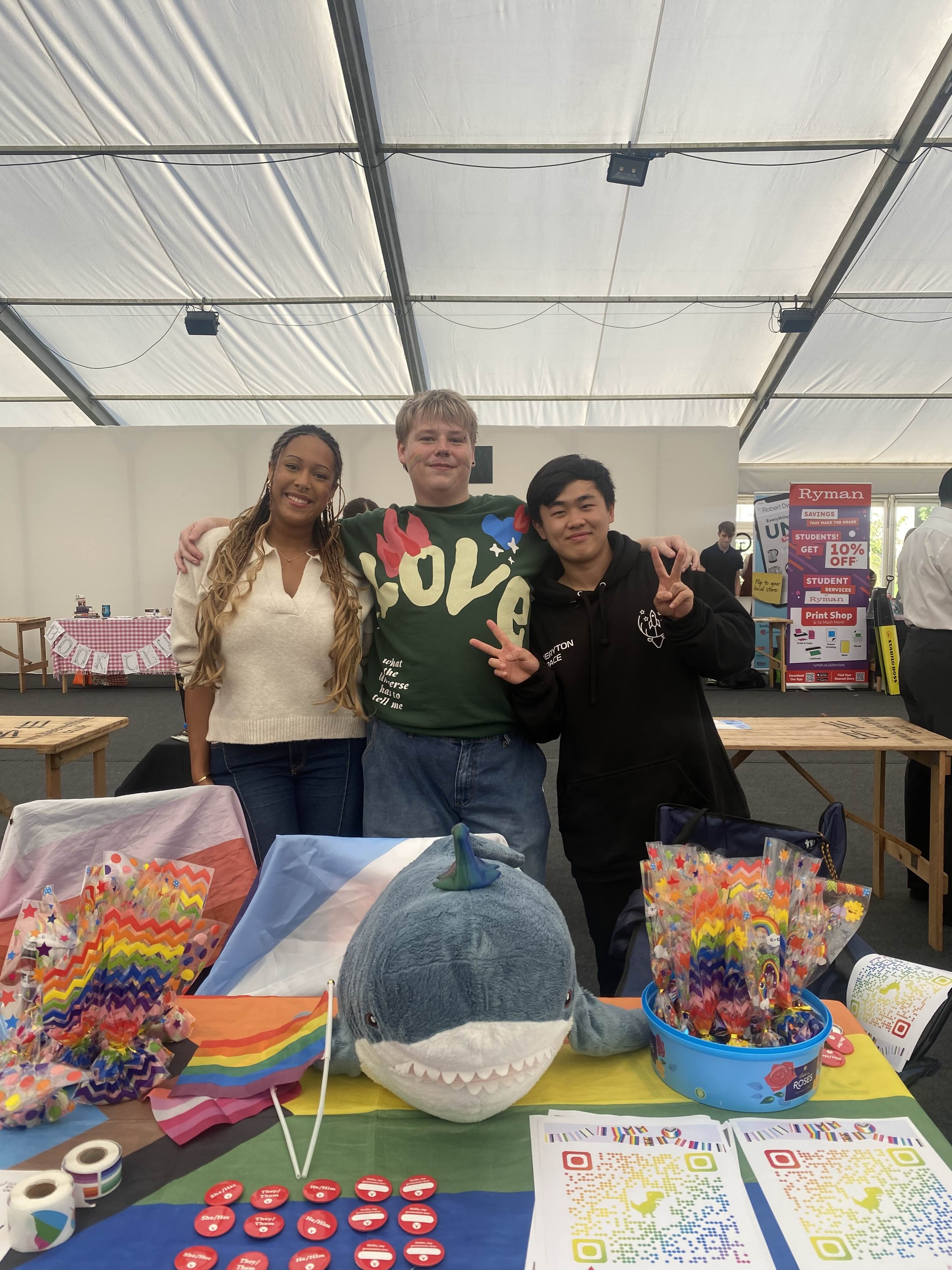
Queer culture has existed alongside every civilisation’s culture for as long as history can tell. However, only recently have queer cultures been allowed to flourish, bringing forth a variety of perspectives and experiences.
To make this project, we have curated a fresh set of reading lists featuring queer stories from around the world, from diverse cultures. Many of them have new, different takes on being queer in different countries.
We also have our signatories of the society in the following section sharing their own experiences:
Denise’s Experience
Growing up, there was very limited bisexual representation in pop culture and media, and definitely no black female representation. When representing bisexuality in the media, it was often fashioned for a heterosexual male audience. Although this had very little immediate effect on young Denise, it definitely shaped the perception of the adults in my life. Part of me always knew I liked women, but the thought was always rejected by the comfort that I was attracted to men. The idea of being queer seemed impossible, and I was never taught that I could be attracted to more than one gender. It wasn’t until Lauren from Fifth Harmony came out as bisexual that I found out that there was something besides “gay” or “straight”. I would love to say that it was comforting to find out that there was a label to describe what I was feeling, but being from an Afro-Latino household, it did not feel like something I could ever admit to anyone, not even myself.
I came out to my parents at the age of 13 when I realised I could no longer pretend that my girlfriend was “just a friend from school”, and it took some time (and a lot of educating) for them to move away from their prejudiced view of what bisexuality meant. I am now fortunate to have amazing parents who support and love me through every new step of my journey. Unfortunately, the rest of our community is not as open-minded. To this day, I still have not seen a queer couple in my community/ family, and even within the LGBTQ+ community, there is little portrayal of the intersectional issues that come from being a queer Afro-Latina woman. However, this is why the internet is such a haven for young queer people, and why being vocal means so much to me. I found more representation, stories, and answers online than popular media could ever have provided. It makes me wonder if there had been more representation from people who looked like me, perhaps I wouldn’t have felt the need to hide from those closest to me.
Patrick’s Experience
Being queer has been difficult for me most of my life, coming from a country such as Myanmar in Southeast Asia, where there was no visible queer culture and likely won’t be for a long time to come. I had no idea what queer culture even was until the advent of the internet, which is also still limited. I have always felt different, even within the LGBTQ community, and the circumstances surrounding where I am from have made my perspective and my queer culture kind of unique. Still, I have long since not just accepted it but embraced it. And that has pushed me to do amazing things which wouldn’t have been possible with what I was dealt with by life, be it good or bad.
