
Written by Dr. Graziella Piga, a Visiting Research Fellow at the Centre for Britain and Europe. Graziella is a Senior Expert in Gender Equality and Social Inclusion, Women Peace and Security who has worked with numerous impactful institutions including UN Women, UNHCR, and OSCE.
Over recent months, I have had the privilege of contributing to several international policy forums addressing some of the most pressing challenges facing Europe today: gender equality, security sector reform, digital transformation, artificial intelligence, and violence against women and girls.
These engagements reflect the close relationship between my research at the University of Surrey, my practitioner work with international organisations, and my commitment to translating academic knowledge into policy and institutional practice. My research examines gender equality, gender-based violence, security sector reform and the Women, Peace and Security agenda, with a particular focus on how international norms are implemented by public institutions. Participating in these international events provides an opportunity not only to share practitioners’ insights and research findings but also to test ideas against real-world policy challenges and bring those insights back into both research and teaching.
This research-policy nexus lies at the heart of the work of the Centre for Britain and Europe, which seeks to connect academic scholarship with contemporary European policy debates and foster dialogue between researchers, policymakers and practitioners.
Gender-responsive leadership and Security Sector Reform: sharing practice from Ukraine
One of these engagements was my invitation, for the third consecutive year, to speak at the Academic Conference organised by the National Academy of the State Border Guard Service of Ukraine. My presentation explored the importance of gender-responsive leadership within security institutions and examined how leadership, organisational culture and institutional accountability influence equal opportunities, career progression and operational effectiveness.
Drawing on both research and field experience, I discussed how security institutions can strengthen resilience by embedding gender-responsive leadership into everyday practice rather than treating equality solely as a compliance issue. I also presented my practitioner work undertaken through the EQUAFORCE Project in collaboration with GS Foundation, highlighting how institutional reform depends not only on legislation but also on transforming organisational culture, leadership behaviours and accountability mechanisms. Sharing these experiences demonstrated how practitioner-led projects can contribute directly to broader debates on security sector reform.
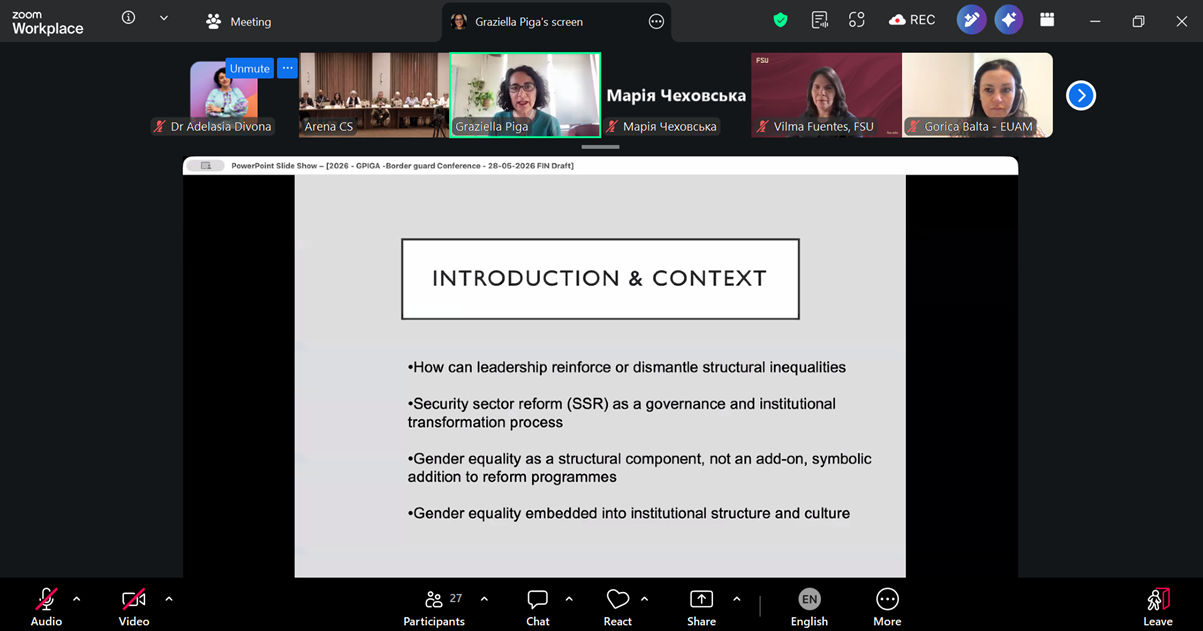
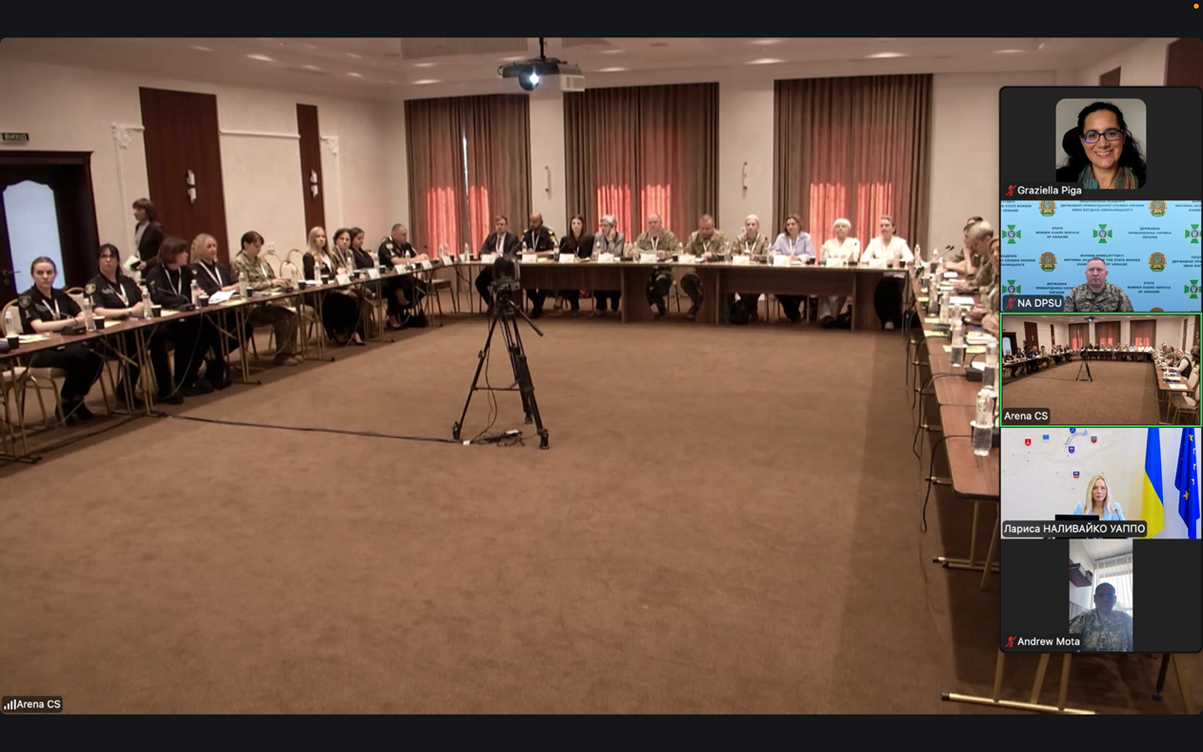
The opportunity to address an audience of academics, senior military representatives and security professionals also demonstrated the value of research-informed practice. Many of the issues discussed, including institutional culture, leadership accountability and organisational reform, are central themes in my own research and illustrate how academic work can directly inform institutional development in complex and conflict-affected environments.
Women, Peace and Security: bringing community perspectives into European Policy discussions
My engagement continued in Strasbourg at the Council of Europe Gender Equality Commission (GEC) Conference on 9 June, where policymakers, practitioners and civil society representatives examined the role of women in peacebuilding and conflict recovery. During my intervention, I shared experiences from Ukraine, focusing on the localisation of the Women, Peace and Security agenda, the growing levels of violence against women following Russia’s full-scale invasion, and the essential contribution of women at community level in supporting resilience and recovery.
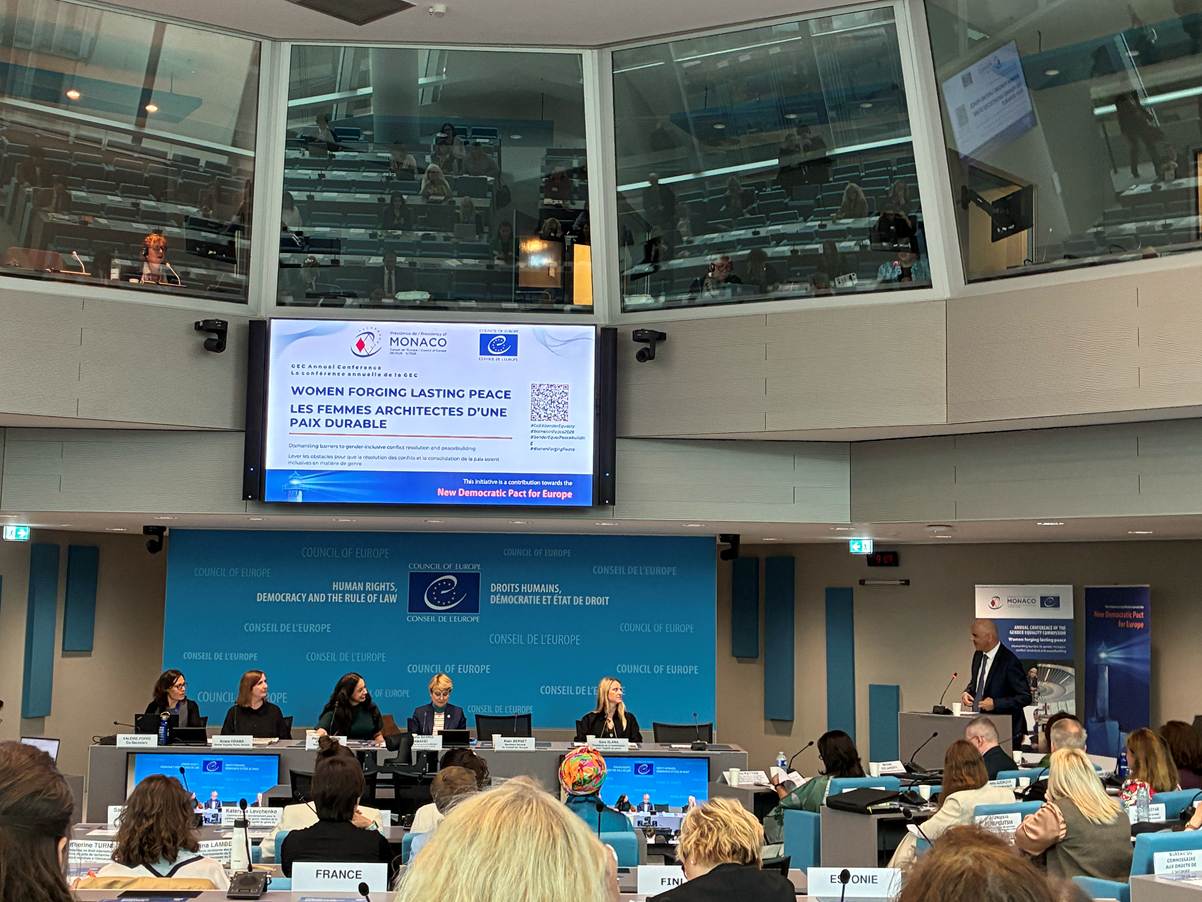
Opening remarks, Secretary General of the Council of Europe.
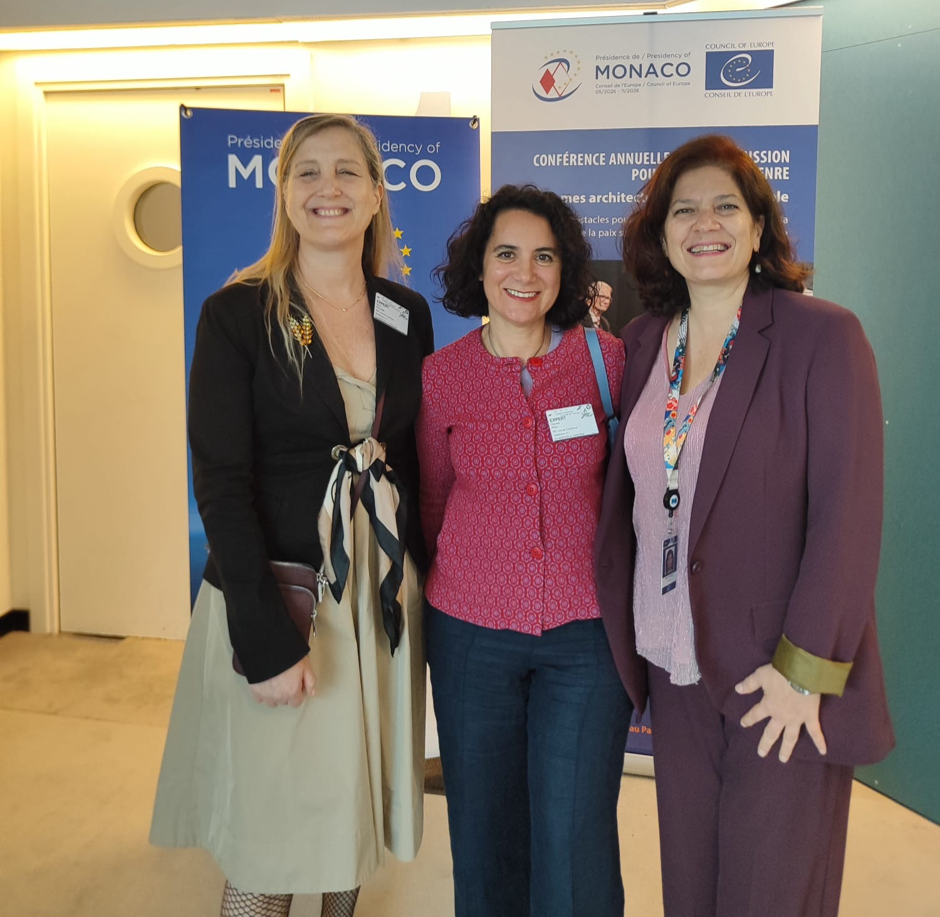
Dr. Graziella Piga (centre) with Dr. Polloni, Representative Department of Gender Equality of Italy and Dr. Caterina Bolognese, Head of the Gender Equality Division, Council of Europe.
I also emphasised the work I did as a practitioner through Gender Associations in strengthening institutional responses through capacity building. In particular, I highlighted our work in training police officers on sexual harassment. This is not simply advocacy; it is about strengthening institutions so that rights are effectively implemented. In conflict-affected countries where public institutions operate under extraordinary pressure, building institutional capacity is essential if legal protections are to translate into meaningful outcomes for women and girls.
These discussions also reinforced an important aspect of my research: understanding how international gender equality standards move from policy commitments into everyday institutional practice. Bringing practitioner experience from Ukraine into European policy discussions enabled me to contribute practical evidence on the opportunities and challenges of implementing these international frameworks on the ground.
Addressing emerging challenges: technology-facilitated violence and digital gender inequalities
On the 10th of June, I attended the launch of the Council of Europe’s GREVIO Recommendations on Technology-Facilitated Violence Against Women and Girls. The high level event highlighted the growing recognition that online violence represents a serious threat not only to individual victims, but also to democracy itself. When women withdraw from political participation, journalism, activism or public debate because of online abuse, democratic representation and public trust are weakened.
These discussions strongly echoed many of the issues explored within my own research on gender-based violence and institutional responses. They also reinforced the importance of ensuring that governments move beyond prevention alone by strengthening accountability, enforcement and international cooperation in responding to technology-facilitated abuse.
Most recently, on 8-9 July, I participated in the OECD Forum on Gender Equality, Harnessing Digital Transformation for All, where ministers, senior government representatives, international organisations and experts explored how digital transformation and artificial intelligence can promote gender equality while addressing emerging risks.
Throughout the Forum, discussions consistently demonstrated that digital transformation is not gender neutral. Artificial intelligence, online platforms and digital public services have enormous potential to improve education, employment and civic participation, but without deliberate governance they can also reinforce existing inequalities. Technology-facilitated violence against women and girls emerged as one of the Forum’s central themes, alongside broader questions concerning democracy, AI governance and digital inclusion.
During one of the discussions on artificial intelligence, I contributed by raising the often-overlooked issue of older people’s digital inclusion. As governments increasingly digitise services and AI becomes embedded within everyday life, ensuring that older generations are not excluded from technological advances is becoming an important policy challenge. Digital inclusion requires not only skills training but also affordable technology, accessible services and inclusive design that reflects the needs of diverse users.
From Practice to Research: reflecting on the localisation of WPS in Ukraine
At the British International Studies Association (BISA) Annual Conference in Brighton, I presented work in progress from my current research examining the localisation of the Women, Peace and Security (WPS) agenda in Ukraine. Drawing on a combined analysis of policy documents and semi-structured interviews, the project explores how localisation is understood, interpreted, and enacted in a conflict-affected context. Rather than treating localisation as a fixed policy concept, the research investigates the ways in which its meaning is negotiated through interactions between international frameworks, national institutions, and local actors, highlighting both the opportunities and the challenges of implementing the WPS agenda in practice.
Presenting this research provided an opportunity to reflect on the relationship between practice and scholarship, using academic inquiry to critically examine assumptions, tensions, and everyday implementation challenges that emerge in professional settings. For me, research is not separate from practice but an extension of it, a space to step back, interrogate prevailing approaches, and develop a more nuanced understanding of the policies and processes I engage with professionally. The feedback and discussions following the presentation helped refine both the conceptual framing and methodological direction of the project, reinforcing the value of academic dialogue in strengthening research that is grounded in real-world experience while contributing to broader debates on Women, Peace and Security in contexts of armed conflict.
Research with impact: continuing the dialogue between Academia and Practice
Looking across these engagements, a consistent message emerges: effective policymaking requires a continuous dialogue between research, practice and decision-makers. Academic research provides the evidence needed to understand complex social problems, while practitioner experience ensures that policies remain grounded in institutional realities. International forums such as these create valuable opportunities for these perspectives to inform one another.
For the University of Surrey and the Centre for Britain and Europe, this work illustrates the importance of research with real-world impact. Contributing to international discussions at the Council of Europe, the OECD and leading Ukrainian academic institutions not only enables me to share research internationally but also enriches my own scholarship, informs my contributions to modules on Gender and Security for Surrey students, strengthens collaborations with policymakers and practitioners, and creates new opportunities for future research. In an increasingly interconnected Europe, universities have an important role to play in shaping policy debates, and I am proud to contribute to that mission through both my academic research and my professional practice.
