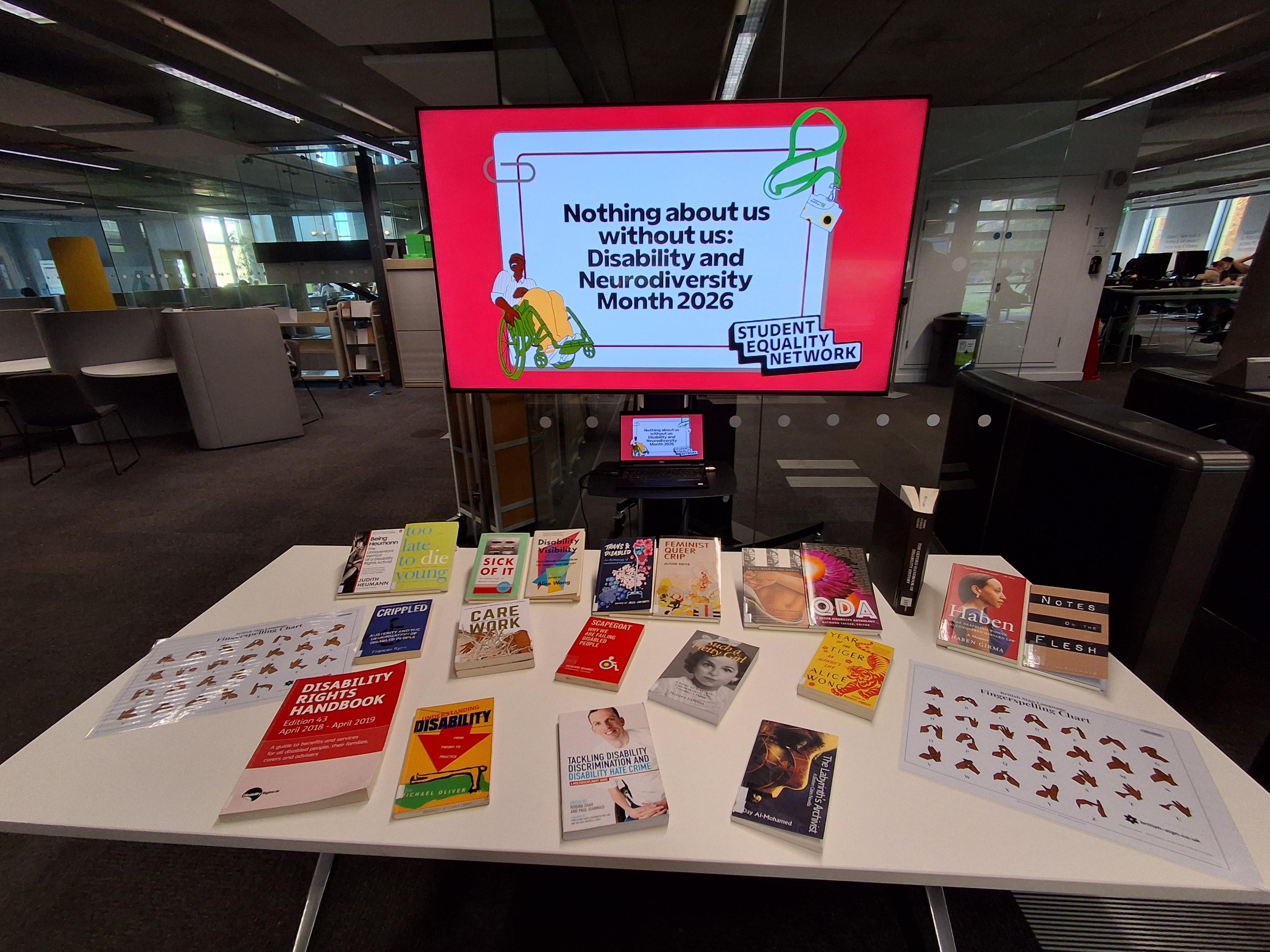
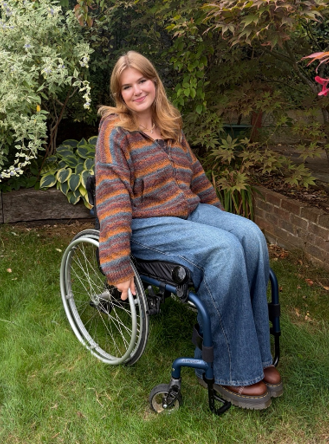
Hi, I’m Rachel! As this year’s Disability and Neurodiversity Subnetwork leader for the Student Equality Network at Surrey, I wanted to highlight some of experiences and stories of disabled people – who are often underrepresented in media.
‘Nothing about us without us’
I chose the title ‘Nothing about us without us’ for this month’s Student Curator project, as it seemed incredibly relevant to both this year’s UK Disability History Month theme, as well as my own lived experiences as a wheelchair user. The phrase itself was adopted during the disability rights movement in the 1990s and gained widespread recognition through the book Nothing About Us Without Us: Disability Oppression and Empowerment (2000) by James I. Charlton, a book about disability studies. The meaning of ‘Nothing about us without us’ is simple – disabled people want to have autonomy and should be involved in the decisions that impact them.
Through this student curator project, I wanted to share the stories of disability advocacy and justice throughout history, through the stories of disabled people themselves, and to highlight that disability justice has come so far in recent years, but that there is so much more to do. Buses only gained wheelchair spaces in the late 1990’s, after disability rights activists protested, and ramps and wheelchair spaces only became legally required on buses in 2000. Even now, I am often refused on buses because they’re ‘full’, the ramp doesn’t work, or because the driver is simply ‘running too late’.
UK Disability History Month 2026: Disability, Politics and Democracy
UK Disability History Month (UKDHM) 2026 is celebrated from the 14th of November to the 20th of December, with the theme of Disability, Politics and Democracy – highlighting how the underrepresentation of Disabled people can lead to political decisions being made with disabled peoples ‘best interest at heart’ – but without consulting, or talking to disabled people.
‘With currently 16 million disabled people living in the UK coming under the Equality Act definition of disability, there should be more than 100 MPs who identify as disabled, compared to the current dozen or so.’ – UK Disability History Month (UKDHM.org)
Similar experiences have been echoed throughout my own personal life as a wheelchair user. People often assume that I cannot do something, or that I need help to complete a task, without actually asking me. I have often found myself in shops, where the cashier will speak only to my able-bodied friend, despite me being the one purchasing something, initiating conversation, and holding my debit card. My friends have gotten used to turning their backs, or walking away, as that is often the only way that people will interact with me, and not them. It took a long time for me to learn how to advocate for myself, and many of my friends didn’t realise the struggles I face until they saw them for themselves. Disabled and Neurodiverse people face many barriers, that many people simply do not notice, or see.
University of Surrey Disability and Neurodiversity Month 2026
I hope that the books and resources shared in this project will begin to give others an understanding of the struggles that disabled people can face, as well as helping to give disabled students and staff at Surrey a sense of community, solidarity, and validation.
Alongside this Student Curator Project, the Disability and Neurodiversity Subnetwork have lots of exciting events coming up for Disability and Neurodiversity Month, including a film screening, workshops and social events – sign up to the Student Equality Network at surreyunion.org to register your place.