By Martin, a PGR student from the Computer Science Research Centre.
Finding the right PhD supervisor is one of the most essential decisions in your doctoral journey. After sending 256 emails that resulted in 13 PhD position offers, I’ve learned that success in this process isn’t just about volume. It’s about strategy, professionalism, and clarity. Let me share what I’ve learned to help you go through this important step with confidence.

Why Your Supervisor Choice Matters
Your PhD supervisor will be your academic mentor, career advisor, and research partner for 3-5 years. They will influence your research direction, introduce you to new people in your field, and determine your future career path to a certain extent.
On the other hand, if there is a mismatch between research interests, working styles, or expectations this might result in frustration and delays. Therefore, it is vital to devote time at the beginning to discover the right match—it lays the groundwork for a successful and gratifying PhD journey.
Clarify Your Research Interests First
Before contacting anyone, you must be certain about your research area. A completed research question isn’t necessary but you should be capable of showing your broad interests and why they are important to you. This acts as your guide, allowing you to spot mentors whose output corresponds with your aspirations. Check out the latest papers published in your area, go online to conferences, and look at PhD dissertations to get a sense of what’s happening in research today. The more detailed your statement of interests is, the simpler it will be to narrow down potential supervisors.
Finding the Right Universities and Programs
Initially, make a strategic list of countries and universities that fit your characteristics. Take into account the practical aspects: funding available (fully funded vs. self-funded positions), visa requirements, living expenses, and also your personal situation such as health needs or family ties. Start with the reputable rankings like QS World University Rankings, Times Higher Education, US News, and Shanghai Rankings.
Nevertheless, don’t ignore subject-specific rankings—for example, CSRankings for Computer Science—which frequently give more pertinent insights for your area of study. One of the most common but critical steps is to benchmark yourself. Check the profiles of the recently admitted PhD students at your chosen universities. Measure their qualifications, publications, and awards against yours. This reality check will help you locate the areas where you are a competitive candidate. High-impact publications contribute to your application but they are not always necessary—many successful PhD students start their journey without them.
Understanding Different Funding Models
There are significant differences in international funding structures. In the UK, Australia, New Zealand, and most of the European countries, PhD studentships are normally provided together with scholarships or funding. Conversely, in North American universities (mainly the US and Canada), the admission and funding decisions are often made separately. It is important to be aware of this difference—it determines the manner and the time of your approach towards supervisors. In the aforementioned funding systems, when you apply for a position, you are also applying for a project. In North America, however, you may have to go through the admission process first, and then look for funding through teaching assistantships, research grants, or scholarships. Always investigate the funding model at the specific institution you are aiming at.
The golden rule is: Do not get in touch with more than one supervisor from the same department at the same time.
Professional Approach
After potential supervisors have been identified, you should prepare yourself. Read their latest works, get to know their ongoing research and pinpoint the area where your interests match. Your first email has to be brief, formal, and tailored—definitely not a generic mass email as it hardly ever works. The golden rule is: Do not get in touch with more than one supervisor from the same department at the same time. This is thought to be very unprofessional and can spoil your reputation before you even start. Academic departments are tight-knit communities where faculty members sit together and talk. Deal with one supervisor at a time. If you still haven’t heard back after a courteous reminder 4-5 days later, you may then approach another professor in that department.
Crafting Your Initial Email
The first email that you send should be capable of achieving a few things that are:
- A brief self-introduction
- A reason why their research is interesting to you in particular
- A list of your qualifications spelled out clearly
- A sincere expression of interest in future collaboration
- Your CV
- A short research proposal or statement of purpose if required
Limit the email to one page only—professor’s time is very limited, and by being short you show respect for their time.
Common Concerns
Many students fear they are not up to par or they are afraid of being rejected. However, remember that rejection is part of the process and not an indication of your worth. From my 256 emails, I learned that timing, fit, and funding availability are as important as qualifications. Some professors may not be taking students that year; others may not have funding.
Professionalism combined with persistence eventually opens doors. If you go through the process wisely— with a clear understanding of your interests and respect for academic protocols—you will not only find a supervisor but also the right one for your doctoral journey.
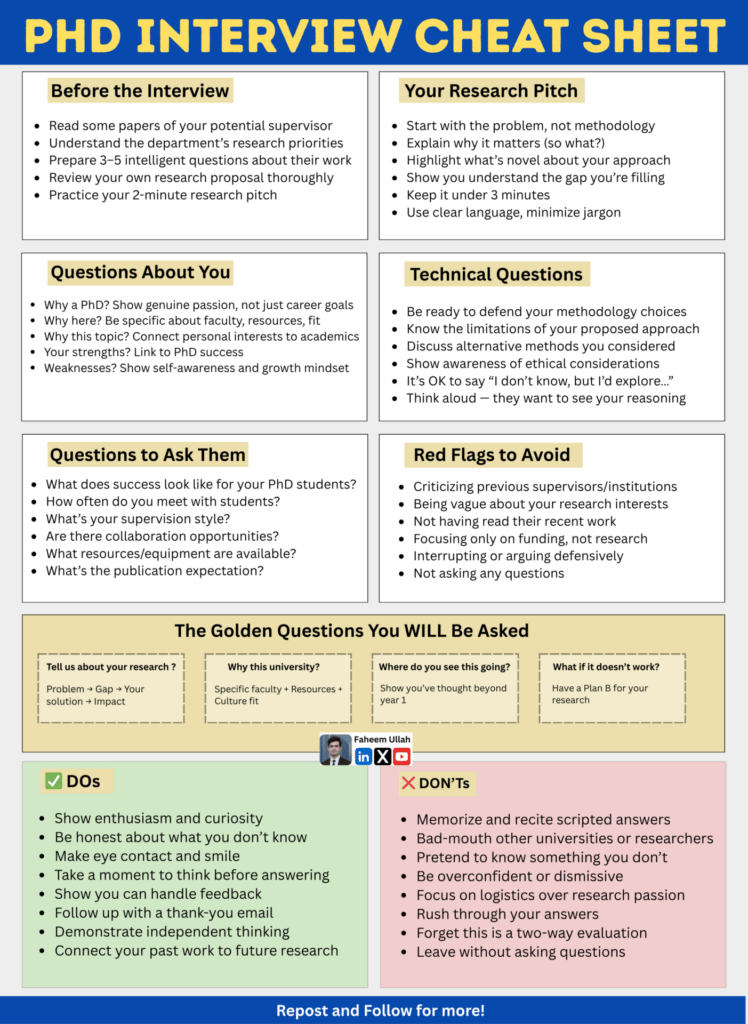
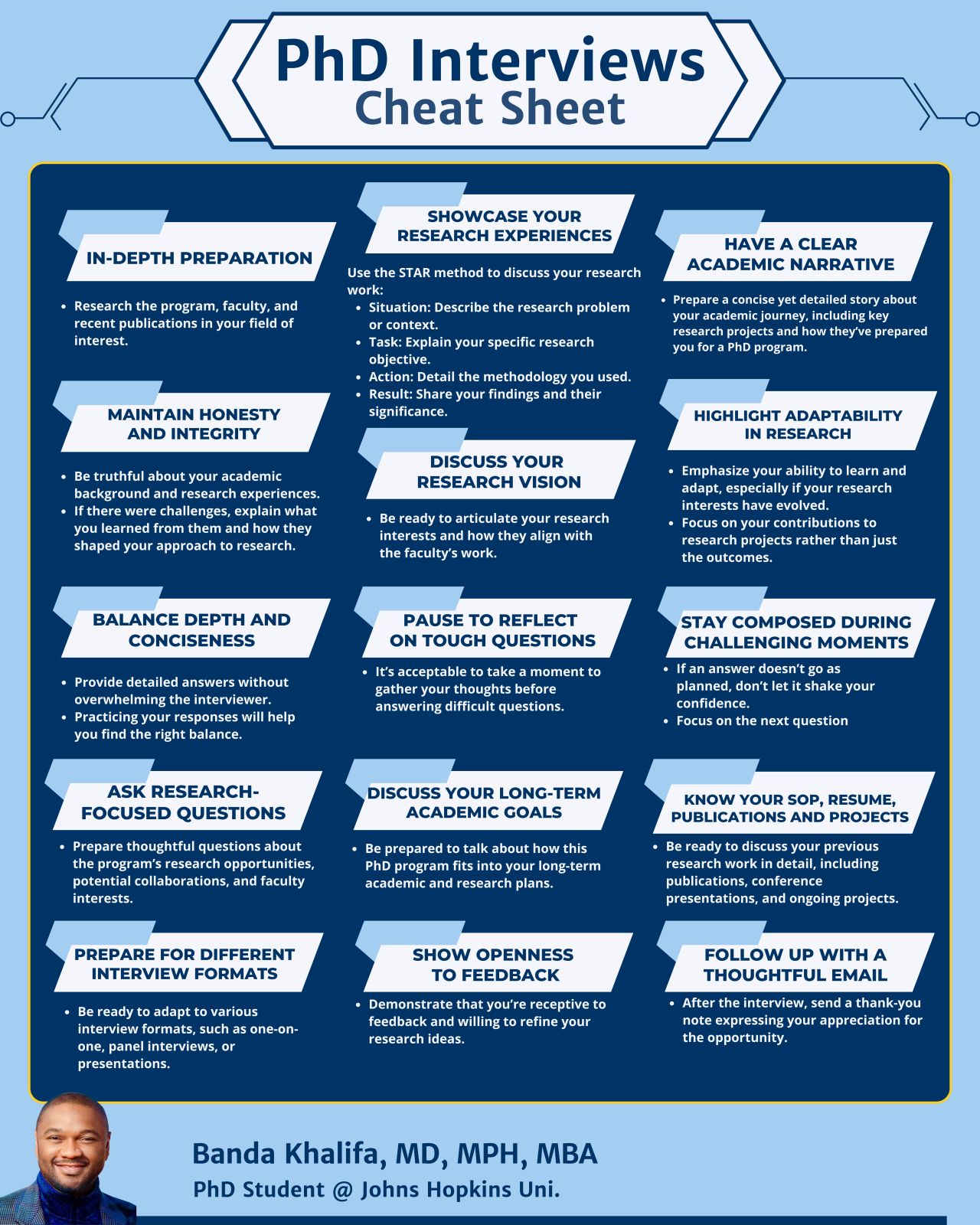
PhD Interview Cheat Sheet